The Adventures of Bloggard

Been Around the Block. Got Some Stories. These are Them.

  • Home
  • Archives
  • About Bloggard
  • Concise Autoblography
  • Contact

How to Speak Chinese

03.13.2011 by bloggard // Leave a Comment

Lyon Street, San Francisco, 1990: Adrienne worked at the Fine Art gallery in Sausality, driving the surveillance vehicle to and from work. That’s what we called the grey Nissan Sentra, because I’d bought it when I was Dr. Detecto, the private investigator.

But fact is, there is a limit to how long you can sit in a grey Nissan Sentra, just surveilling. My limit turned out to be about fifteen minutes.

That’s why Adrienne drove the surveillance vehicle to work in Sausalito. We still lived in the fourth-floor garrett at Lyon and Oak, perched high on the corner overlooking the Panhandle Park, originally named because it’s like a handle on the pan of Golden Gate park further up the street. Later the Bored of Supervisors changed its name from Panhandle Park to Panhandle Park. It’s the same name, sure, but now it’s named after the bums that hang out and pester you for spare change.

So, we lived there beneath the gabled roof, high above Panhandle Park.

THE BAY TO BREAKERS RACE

There was a Sunday morning, every year, when sleeping would become impossible, because as the sun was peeking through the high branches of the tree outside, we would hear, from the road below, a great murmur and clatter. Peering from our high windows, we’d see, spread out for blocks and blocks, the throng of runners in the Bay to Breakers race, as they ran in a chattering mob along the street and through our Panhandle Park.

It was very satisfying to make the coffee, staring bleary-eyed down through the branches, watching the runners and thinking how nice it was to not be among them.

Also entertaining were their bizarre costumes. Runners dressed as hot dogs or streetcars, and sometimes they were nude, except for the running shoes, of course. It must have really hurt, pinning the cloth number on, without a shirt.

And this morning, after the coffee had sped me up, I remembered that I’d promised to help Adrienne with the Chinese art dealer.

STANLEY HO, THE CHINESE ART DEALER

She had this customer in Hong Kong. It never seemed clear whether he was a collector, or an art dealer himself. His name was Stanley Ho.

As you know, China is on the other side of the planet. As we all learn when we are children, if you dig down through the earth you will pop out in China, where everybody is walking upside down. They must be upside down because anyone can see that we are right-side up.

Not only are they upside down, but they are sleeping in the middle of the day, and they are running around all during the night. Our day, and our night, I mean.

Now Adrienne was very happy about Mr. Stanley Ho, because now and then he called up the Fine Art gallery, and he would buy Erte sculptures. If you have been so fortunate as to have missed Erte sculptures, let me tell you that they are little statues about a foot tall, depicting mostly women in 1920’s or Art Deco garb, looking totally thin and blase from a long time ago.

Plus, they’re really, really expensive.

So it was just swell whenever Stanley Ho would call up the gallery and buy an Erte sculpture from Adrienne. There is apparently no end to the Erte sculptures. Like Barbie dolls or the science-fiction novels of L. Ron Hubbard, mere death of the artist seems not to slow production at all!

THE PROBLEM

However, the problem was that Adrienne was supposed to telephone Stanley Ho. She had agreed to call Stanley Ho. She had attempted to call Stanley Ho. She had several times risen in the wee hours of night, so as to catch the daylight hours in China.

And each time, Chinese secretaries answered. They would mutter in sing-song Chinese, or in garbled English. But regardless of the conversation, never, never, never would they put Adrienne through to Stanley Ho. Never, never, never.

Adrienne had promised to call. She’d tried to call, over and over again. But she couldn’t get past the incomprehensible secretaries. It was like an impenetrable wall of singsong. Adrienne told me about this at great length, and last night I’d promised to help her.

And this morning, as coffee fumes cleared my brain, I realized it was time to strike, now!, before the Stanley Ho business office closed for the day!

And so I dialed the number in Hong Kong.

It rang.

It rang some more.

A diminutive female voice answered with some Chinese gobbly-gook. I interrupted her.

“Stanley Ho!” I said sternly. She chittered at me. I spoke louder.

“Stanley HO!” I said. She began talking again.

“Stanley HO!” I yelled furiously.

“One moment,” she said.

There was a pause. I motioned Adrienne over. I handed her the phone as a male voice said, “This is Stanley Ho, may I help you?”

Categories // All, family, Looking Back, manifestation, Problems

Ron’s Chinese Dinner

03.13.2011 by bloggard // Leave a Comment

Canoga Park, California, Summer 1962: Ron, the Megatar shop foreman, was a junior in High School, and his pal Johnny Blevins worked for Lim’s Chinese Food restaurant at Sherman Way and Topanga Canyon Boulevard. One day Johnny told Ron he needed some help.

“I’ve got to go on a vacation with my parents,” Johnny said, “and if I don’t get somebody to fill in for me at Lim’s, I’ll lose my job!” Ron stared.

“What do you do?” he asked.

“All you do is answer the phone,” Johnny said. “Mr. Lim doesn’t speak English very good, so you just take the orders. It’s just for a week.”

“OK,” Ron said.

“And ask him to feed you,” Johnny said, “That’s part of the deal. He’s supposed to give you dinner.”

“OK,” Ron said.

Vacation time arrived, and Johnny left with his parents, and Ron showed up at Lim’s Chinese Food restaurant. Mr. Lim looked him up and down.

“Huh!” said Mr. Lim, pointing to the phone. “OK. You take order!”

Ron took the orders. It was quite busy, one order after another. It turned out that Mr. Lim spoke very, very little English. Ron had to write down the orders by number. For example two orders of pot-stickers was “two number four,” and one order of beef and broccoli was “one number seventeen.”

In this way, they worked their way through the evening.

It grew late and Ron was hungry. He felt a bit timid, but finally he stuck his head into the kitchen.

“Can I have something to eat?” he asked.

“What?” screamed Mr. Lim. “You got no mother? You got no father? They don’t feed you?!!“

Ron’s head shrunk down to his shoulders. Hungry, and crushed by the harsh words, he slunk back to his ringing telephone and took another order.

Then, another order. Then, another. While Ron was writing down these orders, there suddenly appeared before him a heaping plateful of rice and vegetables, steaming, with a heavenly smell!

Mr. Lim took the written order. Ron fell on the food.

“Huh!” said Mr. Lim.

Categories // All, Looking Back

Thanksgiving Past … and Present

03.13.2011 by bloggard // Leave a Comment

A Present for Hazel

Norwich, Vermont, Thanksgiving Day, 1960: While they built their dream home in Hannover, New Hampshire, Adrienne and her parents lived across the Connecticut River, in Vermont. Their temporary home backed onto government lands, where her father took them hiking, but not during deer season.

In the paper, the farmer offered some hound dogs, because the hunters kept shooting at them. Whether hunters mistook the brown-colored dogs for deer, or whether they chose to shoot the dogs to prevent their chasing the deer, was uncertain.

Adrienne wanted both of the two dogs, but she could only have one so she chose the one and named her “Taffy”. All the way home in the Renault, Taffy bayed out the window. Surely Taffy missed her sister.

But once settled, Taffy took to her new home, her new family, and the vast woodlands to roam, behind the house.

Years before, in an older and larger Colonial home, Adrienne’s grandparents used to visit during the summers. Her grandmother helped her grow strawberries, and then they’d trudge to the road, to sell them at their neighbor’s fruit stand.

But the grandfather had passed away, and the grandmother found a cottage on a lake in Florida, and wintered there, away from the cold. And so it was that the grandmother always missed the birthday of her daughter, Adrienne’s mother Hazel, for Hazel had been born on Thanksgiving day.

That year the family was preparing for the double holiday, but they couldn’t find Taffy. They called for her in the late morning, but she didn’t show up. They called for her in the early afternoon.

Finally, late on Thanksgiving day, with afternoon shadows stretching across the lawn, Taffy drug herself into the yard. Miles away, in the woods, she’d been shot, but she had crawled the miles, so she could die at home. Adrienne was devastated.

The next day, word arrived that the grandmother had been found in her cottage. She, too, had died on Thanksgiving day. Adrienne was devastated again, and Hazel took to her bed as well, crying for their loss.

“Of course she died on Thanksgiving,” wept Hazel. “She knows my bad memory. This way, on my birthday, she knows I’ll remember.”

The next day, a package arrived in the mail, which had been sent by the grandmother. Inside they found Hazel’s wrapped birthday present, which was a bottle of perfume.

Its name was “Heaven Scent.”

Categories // All, Looking Back

A Photograph of the Past

03.13.2011 by bloggard // Leave a Comment

Looking Out the Window in 1826

St. Loup de Varennes, France, 1826: Mr. Joseph Nicephore Niepce (Nee’-sah-for Nee’-yeps) has made a photograph: the view from an upstairs window.

Discovered in a trunk in 1952, the photo now resides in an airtight case at the University of Texas. The six inch by eight inch image is believed to be the first photograph ever made.

You are, right now, looking out a window into the year 1826.

John Quincy Adams, 6th US President 1825-1829

There are no autos on the roads, no telephone lines, no electric lights in cities, no World Wars, no airplanes. Kings rule countries. The United States is a minor power only 50 years old; A year ago, John Quincy Adams was elected as our sixth President.

To make the image, Mr. Niepce used a polished plate of pewter metal, coated with a thin layer of a black, tarry substance called bitumen. Bitumen was once called “pitch”, as in “pitch black”, and is used these days in making asphalt.

Bitumen is light-sensitive. Ever noticed a new asphalt road is dark black and soft, but after 2-3 days it turns a pale gray and hardens? In large part, light causes this change.

Similarly, during the exposure, which may have taken up to three days, the bitumen hardened as it turned pale. Then, washing the plate with a solvent (made from oil of lavender and white petroleum) dissolved the still-soft bitumen where the shadows fell.

And presto! The view from the window.

Categories // All, Looking Back

That Big Bang Sound

03.13.2011 by bloggard // Leave a Comment

What did the Big Bang Sound Like?

13.7 Billion Years Ago: Bang!

Or was it? That is, what did it sound like, really?

Recently, an 11-year-old boy asked physicist John Cramer this question. And to answer the question, Cramer, working at the University of Washington in Seattle, has made a sound file so that you can hear the Big Bang for yourself.

Here’s how:

NASA runs a project called the Wilkinson Microwave Anisotropy Probe. Anisotropy means that something’s different when you measure it in two different directions. Who needs a word like that? Not something you can use every day, no.

Anyway, this microwave probe measures the temperature of the microwave light in the universe, in teeny-weeny little increments, like a billionth of a degree. During the Big Bang, the universe is thought to have been filled with very hot gas, and lots of light. Gas cools as it expands — that’s why hairspray or WD-40 feels cool when you spray it — so as the universe expanded, the gas cooled down.

But, aside from some condensation into suns and planets, the same gas still fills our universe, only it’s really thinned out and cooled down. The same light has travelled a long way, but it’s still around, too.

The Oldest Light in the Universe

By measuring microwave light in teeny-weeny increments, in all directions, scientists have made this picture of the oldest light in the universe (kind of like taking a picture of an 80-year-old man which shows him as an infant).

And from these same measurements, John Cramer calculated the frequencies of the sound waves moving outward through the first 760,000 years of our universe, when it was only 18 million light-years from one side to the other.

These sounds waves are such low frequency that we couldn’t hear them, so Carter has sped them up 100,000 billion billion times, to move them into the narrow range our ears can hear.

Now we can hear from the loudness and pitch what happened in the early universe. You’ll hear the frequencies fall during the recording because the sound waves become stretched as the universe expanded.

And now, for your listening pleasure:


The Sound of the Big Bang

Categories // All, amazement, Looking Back

Don’t Cook Christmas!

03.13.2011 by bloggard // Leave a Comment

Fernwood Street, Hollywood, 1970: Bell-bottom pants were big, see-through shirts were the ticket. I went to buy some.

In the little shop, a saleswoman slightly older than myself correctly identified me as a rube, and coerced me into black and white. (I look lousy in black, and I look lousy in white, but I didn’t know it then.) I tried on these odd garments, wasn’t sure.

She spied a loose thread on the pants, dangling from the area of the zipper.

“Let me get that off,” she said. In the middle of the store, kneeling on the carpet, she bit it off.

Both flattered, and embarassed to the core, I hurredly gave her my last dollars, and left quickly.

Back home, I unpacked my purchase and showed them to my roommate, John Hill, the Rock and Roll bass player. He said, “Cool.”

The children from next door were looking in our window. When they were standing outside, their eyes just came above the sill. John held up my new garments to the children. “Whadda ya think?” he asked them.

The children giggled. John got a funny look in his eyes, as he turned back to me.

“Say,” he said, “I’m kind of hungry.”

“So am I,” I said.

“But wait a minute!” he said, “We don’t have any food!”

“What will we do?” I asked.

“I know!” he said, snapping his fingers, “Let’s cook Christmas!“

Christmas was our small black cat. John had found him at Christmastime, hence the name. We also called Christmas the $400 cat, because he’d had a stupdndous vet bill last month. Christmas was at this moment winding himself around John’s legs.

When John suggesting cooking Christmas, the children gasped.

That was perfect. I grabbed up the cat.

“Go turn on the oven!” I exclaimed.

John ran to the kitchen, with me following holding Christmas the cat, who swayed in my hands, feet dangling. As we ran into the kitchen, the children moved up the little alleyway, so now they were peering into the kitchen window.

John reached down and pretended to turn the oven knob.

“OK, the oven’s on!” he yelled.

“Open the oven door!” I cried.

He flung down the oven door. I took an exaggerated heave, and swung Christmas the cat *under* the oven door, whereupon he immediately ran from the room. But the children couldn’t see the floor because the window sill was too high. Their mouths fell open and their eyes grew round.

John slammed the door, and turned to me.

We both rubbed our tummies, licked our lips, and cried out, “Yum! Yum!”

The children were now jumping up and down in worry.

“Don’t cook Christmas! Don’t cook Christmas!” they cried.

We turned to them in surprise, as if noticing them for the first time. John held his hand behind his ear.

“What? What?” he said. “What did you say?” The children jittered with worry.

“Don’t cook Christmas! Don’t cook Christmas!” they called.

“Oh,” he said. “No?”

“No! No!” they cried, “Don’t cook Christmas.”

“Oh, he said, “OK.” He opened the door, and pretended to take Christmas out. “You go run and play,” he said to the invisible Christmas. He turned back to the children.

“How’s that?” he said.

“Thank you! Thank you!” they cried out. “Thank you!”

Not long after, I packed up and moved back to Texas and Midwestern University. John went on to become “Magic John’s Blues Band.” I don’t know what happened to Christmas; I hope he was happy.

Categories // All, Looking Back

The Day of the Murders

03.13.2011 by bloggard // 2 Comments

San Francisco, November 27, 1978: I was living in the studio apartment at 495 Third Avenue; and I had a devastating flu that knocked me woozy, half-unconscious.

Over the radio, the murders seemed lurid, wacko, surreal.

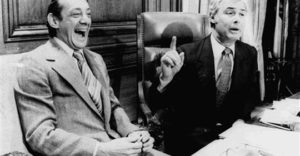
George Moscone was San Francisco’s very popular new mayor, after many years of Joe Alioto. Diane Feinstein was on the board of Supervisors, as was ex-police-chief Richard Hongisto, along with Harvey Milk and Dan White.

Harvey Milk ran a camera store on Castro street. He was the first openly gay candidate elected to public office when he was voted a Supervisor.

Dan White ran a tourist shop on Pier 39, and after being voted a Supervisor, supported the Briggs initiative, which would ban gays from teaching. Dan clashed with Harvey, and with mayor Moscone, on a number of issues, and Dan was also having business problems with his shop. White at one point resigned his post, and then later, wanted it back, but mayor Moscone declined.

According to White, his colleague Harvey Milk “smirked” at him, and therefore Dan White decided to kill both supervisor Milk and mayor Moscone with a small-caliber pistol.

Harvey Milk, the Gay Supervisor

He smuggled the pistol past City Hall security by the simple expedient of leaving a window open, through which he then re-entered with the pistol. He murdered both men in their offices with the hit-man’s trick: he shot them in the belly, which is so painful it incapacitates the man, and then close-up he shot them in the head.

Later, when White’s attorney invented the “Twinkie” defence, claiming White was unstable due to stress and eating Twinkies, there were riots, but at sentencing time, White escaped the death penalty, though after parole he committed suicide, as is proper for Twinkie murderers.

On the day of the murders, dimly following the reports on the radio through my flu-muddled mind, it seemed surreal, shocking and unbelievable. But perhaps I am to be forgiven that what I remember most about the day was something else entirely.

My girlfriend Joanne had made for me a long nightshirt, of orange and brown stripes; it resembled those long African robes that some black men affected at that time. Sounds awful, but it was comfortable.

I was wearing only this long shirt when I tore myself from my sickbed, because I had to take out the trash. It had heaped up too much, becoming smelly, and it was bugging me. I only had to go a few steps down the hall, and behind the frosted glass door was the trash chute. Nobody would see me, barefoot in my night shirt. No problem.

Afterward, discovering that I’d locked myself out of my apartment was very disappointing.

Dim-witted, I thought over my options. I didn’t much like them. And I didn’t like the obvious answer, which was to climb the stairs to the roof and come down the fire escape to my apartment on the third floor.

On the roof in the early November afternoon, the sky was bright overcast, and the sea breeze brisk. In my thin night shirt, no undies, no socks, I was freezing. No help for it.

At the edge of the roof, I paused, woozy. No help for it, so I firmly grabbed the hand rail, turned facing the roof, and stepped over the edge of the building, feeling with my bare foot for the metal step below. Found it. So, step by step, I climbed down the two stories to my own window.

The chill wind turned gusty, blowing my night dress in bursts up around my waist. Being naked beneath, I hoped no neighbors were at their windows.

Up the block, two black women pushing perambulators appeared around the corner and were briskly walking toward me.

“Oh, great,” I muttered, hoping that they wouldn’t look up.

I had to focus, but the biting cold of the metal steps on my hands and bare feet helped. I was shivering uncontrollably, but forced myself to move slowly and carefully. My night shirt blew lewdly this way and that. I was chilled through when I reached the metal ledge outside my window.

The window was open an inch. I pulled it open wide. Clumsily I climbed in.

I could hear the women as they passed below, for one spoke to the other.

“Now that burgler,” she said, “. . . he bold!”

Categories // All, Looking Back, mind, News

Ram Das

03.13.2011 by bloggard // Leave a Comment

Midwestern University, Wichita Falls Texas, 1965: Actually, not Ram Das, yet. Rather, it was then still Richard Alpert.

“Tune In, Turn On, Drop Out!”

I’d ransacked the North Texas State library stacks, reading up about this LSD that was making news. Harvard researchers Leary and Alpert were urging “Tune In, Turn On, Drop Out!,” and what in the world did that mean?

The psych abstracts were puzzling, describing synaesthesia, n., which means (1) “A condition where one type of stimulation evokes the sensation of another, as when the hearing of a sound produces the visualization of a color.” Or (2) “A song by Cannonball Adderly.”

Hearing a color? The smell of a picture? The feeling of a sound? Huh?

So when Richard Alpert was speaking, over at Midwestern University, I was ready to go hear it. And so was Kit Thorne.

Little did I know that the somewhat similar Anhalonium Lewinii (peyote) had been known back to the turn of the Century (that earlier one, in 1899) to worthies such as Aleister Crowley. If only I’d studied my Magick, I could have known so much more! But then, we didn’t know that Magick was abounding about us, no, not at that time.

At that time, I didn’t know that Richard Alpert would become Ram Das, that he would live up the street from me in San Anselmo 30 years later, and that even being neighbors I’d never see him again. We didn’t know that Leary would be jailed, and would then escape by levitation. Actually, there was a whole world of what we didn’t know, back in the time of my corduroy coat.

Kit was a pretty brunette, of vivacious enthusiasm, girlfriend of my sour pal, John Mahoney, the photographer who contributed the picture for my story Ralph the Cat in the Avesta magazine. But John couldn’t go, don’t recall why, though sitting in the booth at the Hob Nob, Kit begged to go, and so go she did.

When my stepfather, Dr. Strickland, heard of the venture, to my vast surprise, he decided to go as well. Either he was secretly hipper than I knew, or just palling along with me, or … well, I just don’t know what, but he and my mother and Kit and I showed up at Midwestern Auditorium on the appointed day.

The speaker was late.

On the drive up, Kit had told me of haunted adventures, overruled with sudden tears from nowhere, voices heard, ghosts seen. It fit. And it was beyond me. It seemed very dark. And years later, as the ghosts decreed, she became lost into a darkness, gone. But back then, we knew nothing, and I was half in love with Kit, just because of who she seemed and how she looked. I watched her secretly, while we waited for Alpert.

Finally, he was announced, and walked up to the podium.

Standing there, he paused for a moment.

Actually, kind of a long moment. Well, truly for more than just a moment. He stood, looking into space above the head of the audience, for a long time. A very long time. A really, really long time. It was a long time. A very really long time. Long time. Then he smiled.

“Hello,” he said. And went on to speak about LSD and the fact is I remember not one thing from that talk, but only what came after. When the talk was done, and others filing out, Kit said, “Let’s go meet him!”

Well, OK!

Up we trooped onto the stage, Dr. Strickland bringing up the rear, and Richard Alpert turned his open, Indian eyes upon us. Kit smiled up at him.

“I just wanted to show you this,” she said, holding out her hand. On the middle finger of her beautiful soft hand was a delicate ring with a tiny silver globe of fine filagree, in which tiny silver moving parts made a fine, crystaline tinkling sound.

Alpert watched the ring for a long moment, his grin growing wider as he watched. Then he reached into his pocket, drew out his closed fist.

“And I’d like to show you … this,” he said, opening his hand. And there, sitting upright upon his palm, a tiny jade buddha gazed into the vast beyond in rapt contemplation.

As I recall, my stepfather asked some questions, but I don’t know how much communication there was. As it turned out, I discovered later that my friend Lefevre, then studying art at Midwestern, had become involved in Richard Alpert’s arrival, and had whisked Alpert away to Jerry’s house, where they spent the afternoon wandering the background, watching the bark on trees for a very long time, and considering this new LSD that was in the news. Lefevre had not attended the talk; he’d stayed home to examine the tree bark in greater detail, as he explained later.

I suppose Kit and I made our way back to our homes in Denton. This must be the case. Otherwise we’d still be standing there, on the stage, in the Midwestern Auditorium.

That’s just logic, right?

Categories // All, college, Looking Back, mind

  • « Previous Page
  • 1
  • …
  • 20
  • 21
  • 22
  • 23
  • 24
  • …
  • 37
  • Next Page »

Your Fortune Cookie

  • Think about the "Knight of Coins" -- Thoughts focussed on business, money, or folks working on your behalf. Maybe thoughts about investment and methodical approaches. (Or, a mercenary warrior could be involved.)

Our Host


Perhaps you are wondering why I have gathered all of you here.

Recent Posts

  • The Book of Hu
  • Mister Blue
  • Join Me on Social Media …
  • How to Drop the Weight, Look Better, and Feel Better … Made Easier

Recent Comments

  • bloggard on The Altar Boys
  • Tonja Scheer on The Altar Boys
  • Raymond J.Reiss on Calling Lonesome Cowboy Tim

Search By Keyword

Currently 604 micro-stories searchable online. Enter search words and hit return:

Search by Category

View My LinkedIn Profile

View Arthur Cronos's profile on LinkedIn

Credits and Copyright

All contents copyright (c) 2001-2026 Arthur Cronos and Voltos Industries, Mount Shasta, California. Reproduction prohibited except as noted. All rights reserved.

Webdesign by VOLTOS

** TEXT NAVIGATION **
Home * Archives * About the Bloggard * Bloggard's Concise Autoblography * Contact Us * Terms of Use * Privacy Policy * Site Map * Voltos Industries


reviews

[wprevpro_usetemplate tid=”1″]

All Contents Copyright © 2001-2019 · Webdesign by VOLTOS