The Adventures of Bloggard

Been Around the Block. Got Some Stories. These are Them.

  • Home
  • Archives
  • About Bloggard
  • Concise Autoblography
  • Contact

Eddy Frank

03.13.2011 by bloggard // Leave a Comment

Lulu Johnson Elementary School, Henrietta, Texas, 1953: In the third grade, Eddy Frank was a big hit with Susan J. For reasons I could not comprehend, she favored him above other, more attractive boys, such as, for example, myself.

Susan had invented a wonderful game, and Eddy Frank knew just how to play it.

Susan had two little girl accomplices, and, in cahoots, the three of them would sneak up on Eddy Frank, who pretended he didn’t notice. When they jumped him, the two would grab his arms, and he’d wail, “Oh, noooo!”

Meanwhile, Susan J. stepped around to face him, and then, grasping her skirt, she’d pull it high, exposing her brown belly and girlish drawers. Eddy’s eyes bugged, as he feebly struggled.

“Oh, no!” he’d cry out. “Don’t make me look! Don’t make me look!”

Oh, the anguish of it! His wailing cry, the pathos! The boy had the touch. I burned with envy, but never found a way to insinuate myself into the game. I mean, how do you say, “Don’t make me look, too!”

Eddy Frank’s unique brand of resistance made him irresistible. But Eddy Frank wasn’t just skillful with the girls.

That year, a new kid showed up. A skinny, burr-headed boy named Jimmy B. He was the solemn-faced, thin and wiry kind of kid. He seemed tough, and said little.

At the first recess, we gamboled in the fresh September air on the north side of the school. But not Eddy Frank and the new kid. Eddy Frank and Jimmy B. were circling each other, warily. Not a word was spoken. Suddenly, Eddy Frank jumped the new guy. It was a grand fight. Rolling over and other, dirt and pebbles flying, wild fists flailing, tearing shirts, with lots of grunts and growling. They were just wild.

We enjoyed this spectacle until Ms. Gilbert and Ms. Stine pulled them apart. It was clear that Eddy Frank had started the fight, and it seemed out of the blue. That was part of the wonder.

Ms. Gilbert shook Eddy Frank’s arm. “Why did you do that?” she hissed. Eddy Frank glowered at Jimmy, then slowly answered.

“I didn’t like his looks.”

Categories // Looking Back

Remote Controleum, Northern California

03.13.2011 by bloggard // Leave a Comment

Adrienne and I will be scouting Northern California for a few days, investigating to locate a new site you might say. But fear not! Portions of this program have been previously pre-recorded. I will return to wondering what to say on the 17th. As always, your comments are welcome.

Categories // Looking Back

Law 23 of Making Offers

03.13.2011 by bloggard // Leave a Comment

This is a simple law of nature, but one which is very handy:

If your offer sounds good, the human will wonder what’s wrong with it?

That’s it.

It’s human nature to worry if an offer sounds good. Since you know they’re going to do that, make up a “downside”, and make this downside clear in your offer. Anyone reading your offer will find this vastly reassuring.

For example, if you rent cars for less than the best-known brand, you might say something like, “We’re only number two, so we try harder.” In this successful ad from the 50’s, Avis pointed out that they were not number one. It was a drawback, freely offered, a part of the headline. Readers of magazines stopped, and thought, and decided that they didn’t care about Avis’s drawback, being second. Readers concluded that the downside didn’t matter, and then went out and, greatly reassured that they knew the reason for the lower price, rented Avis’s cars by the thousands.

Knowing this important secret of the universe, go forth and prosper.

Categories // Looking Back

The Terror of Voicemail

03.13.2011 by bloggard // Leave a Comment

San Anselmo, California, June 6, 2003:Adrienne will be dropping by the Department of Motor Vehicles, to renew her license, to take her pretty picture and provide a thumbprint.

She has an appointment for next week, but she cannot go to her appointment, due to the convenient DMV voicemail-appointment system.

It sounded like a good idea.

She’s a dogwalker, and sometimes brings playpals to visit our border collie, Tulip. Tulip’s best friend, a loud and brassy retriever, was visiting at lunchtime, and Adrienne thought this afforded time enough for eternal voicemail, so she called the DMV.

After selecting English and hearing important information about how they will monitor the conversation — what conversation? — she heard about their hours, and how to get to the place, which she passes daily when she’s working.

Then came another series of options: “Please press 1 to make an appointment … You have pressed 1 to make an appointment; is this correct? Please press 1 if correct, or press 2 if not correct, or press 3 to hear these choices again.”

Tulip and pal are standing beside her. Half their attention is on her — let’s play ball! — and half they’re scouting for intruder dogs on the sidewalk. Adrienne ignores them, frowning in concentration. The voicemail has reached an important point.

She has been offered one date or another date. She has selected one date. She has confirmed one date. She is receiving an Important Message: “Please have a pencil handy to write down your Appointment Code. You must bring the Appointment Code to your Appointment. Your Appointment Code is-“

A corgi and a ratty-looking terrier skitter down the sidewalk, dragging a young boy on a leash. “Yap! Yap! Yap! Yap! Yap!” exclaims Tulip’s friend. “Wow! Wow! Wow! Wow! Wow!” exclaims Tulip. The dogs scrabble at the window. The DMV voicemail, completely inaudible, drones on.

“-C45”, it says, “Remember, you must bring your Appointment Code to your Appointment. Thank you for calling the Department of Motor Vehicles. For information about our hours and locations, please press 1.”

So Adrienne cannot go to her appointment. She does not have her important Appointment Code. She’ll just have to drop by.

Sometimes that’s just how it goes.

Categories // Looking Back

What is a Weblog?

03.13.2011 by bloggard // Leave a Comment

Dave Winer sez:

“Consider the sequence of developments in publishing:

“In the 70’s, to run a publication, you needed a million-dollar printing plant, or you needed to lease time on one, to print and distribute your publication.

“In the 80’s, with the advent of laser printers, GUIs and desktop publishing software, the cost dropped to $100,000. So more people could publish.

“In the 90’s, publishing technology took off in a new way, all-electronic, and the cost dropped to a few thousand dollars.

“Enter weblogs, and the cost drops to hundreds of dollars, maybe even tens. If you want to do a publication, all you need is the time to write, and an idea to write about. The number of publications goes up every time the rules are rewritten. Now, factor out the non-publication oriented websites. Those are not weblogs. Everything else is.”

Categories // Looking Back

How to Save Time with Abbreviations

03.13.2011 by bloggard // 4 Comments

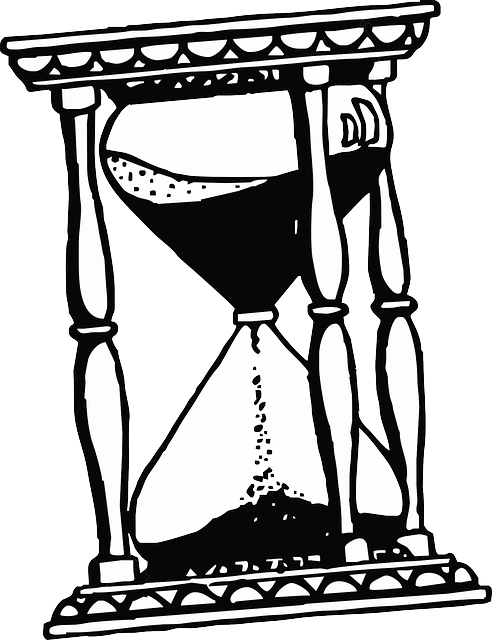
hourglassHere’s a handy tip that can yield big savings:

Use abbreviations. For example, when I operated Network Answering Service in San Francisco, we quickly learned to develop standard abbreviations for common things people say. For example, OOT for “out of town”, or WCB for “will call back”.

Other handy abbreviations include PLSC for “please call”, NA for “not applicable”, DBA for “doing business as”, DA for “doesn’t answer”, and OCS for “onward christian soldiers”.

But why limit this to written notes? For example, suppose you want to thank somebody for something, but it’s just a little thing. You want to thank them a little but not a lot. To communicate this precisely, and to save time at the same time, just abbreviate “Thank you” or “Thanks”.

Say: “Thank.”

See, that’s less than “Thanks.”

But wait, there’s more!

You can abbreviate more complex ideas, as well. For example, perhaps you were thinking just now that these are the moments of your life, and this is how you are spending them. Well, in this case, you could save some thinking time by using an abbreviation of “moments”.

For example, you could say “momo”. That would be like one little moment. Or the plural form “momos”, as in “These are the momos of our lives.”

Often the practice of abbreviation yields surprising insights. For example, thinking about how these are the momos of our lives, you might just naturally think about death. And then of course there would be “no more” momos, and you could abbreviate the “no more” as “nomo”.

So you can see, you could speak, or think, very succinctly. You could think about the momos of our lives, and how, when we die, we got nomo momos nomo.

You see how that can save you time?

It can Really Add Up!

Now if you just save a few seconds every couple of hours, then you’ll accumulate several minutes every single week. By the end of the year you’ll have an extra thirty or forty minutes. Over a lifetime you might have hours, or even days, saved up!

And that ain’t bad.

Categories // All, amazement, fun, ideas, Looking Back

My Seashell Collection

03.13.2011 by bloggard // Leave a Comment

Some visitors may not know that I collect seashells. My collection is quite extensive. In fact, it’s so large that I cannot store my seashells at my house, and so I store my seashells on various beaches around the world. Perhaps you have seen some of them.

Categories // Looking Back

The Short Essay

03.13.2011 by bloggard // Leave a Comment

Evolution isn’t only for the birds. Artforms also come and go, develop, mutate, expand, reach dead ends, or evolve into something new.

The short essay. I think that means spelling out an opinion, or writing about something as if you know what you’re talking about. Do we really know? Maybe. Maybe not.

Once upon a time, cuneaform writing evolved, apparently to keep records of how much grain was stored, then perhaps adapted to sending messages. Generally this would involve land, money, or women, most likely. At the time, hired guns called scribes were the only ones who could either read it, or inscribe it.

But with the invention of moveable type, things changed.

The possession of writing by certain people was a power tool. Writing evolved over and over again. The technology of the times were different alphabets (pictoral, syllabic), including numeral systems (Roman, Arabic), and materials on which to write (clay, papyrus, vellum).

Educated ancients thought science worth keeping, in Phoenician, Greek, and Roman times. Priest classes found writing powerful, and used it to store vast amounts of holy gobblygook, as is proper.

The development of syllabic alphabets made the use of moveable type feasible, and the Gutenberg press came into a world where writing mainly stored oral tradition. After printing the bible many times, the printer looked around.

You know how it is. Give a man a hammer, and he looks around for nails to pound. It was natural that the press expanded to print more and more and more.

As taxes, civilization, and engineering tamed the wilds and the roads, sending letters expanded, as did distribution of books. In between the letter and the book, emerged newspapers.

You gotta fill up a newspaper, right? Reporting news, the telling of stories (Dickens, Arthur Conan Doyle), and the owner’s essaying to splain the world filled newspapers. Thus the essay. As literature became more accessible with the torture of young children- Oops, I meant the development of schools, then an appreciation of writing, and of essays expanded.

By the time of Marconi and Tesla, fiction of all types was flying around the world in books, magazines, and newspapers. Essays rode along. With Tesla’s invention of radio, and Marconi’s invention of radio, a new medium searched for content. Distributing news by radio worked well, and so did distribution of music and fiction. Thus the Green Hornet, the Lone Ranger, and the soap operas. Rural farm electrification in the 1940’s made radio universal in the USA.

Evolution continues. Evolution’s rule is that the old form doesn’t vanish. The old and the new exist side by side, and begin to separate in function, to specialize. Like the right and left sides of your brain (visual and language), the two completely nerve transmission systems in your body (fast and slow), and the two completely different circulatory systems in your body (lymph and blood), both the old and the new coexist, but now handle different tasks.

Thus, handwriting took over from verbal storytelling, specializing in long tales. Then printed writing emerged, specializing in news, fiction, and essays. Radio emerged, taking fiction from magazines and music from live venues. The magazines were left to specialize, and magazines today all focus on specialized subjects. Movies arrived to take drama from the stage, and in the 50’s, television took drama from the movies and the radio, leaving movies with spectacles and radio with music.

And the short essay? What has happened to the short essay?

Like the short story, this artform has languished. Oh, great short essays have been written. Look in any New Yorker, or any trade-oriented magazine, or political newspapers. But the short essay has not been widely appreciated in our time.

But perhaps this may be changing. Perhaps the short essay — such as this one you are reading now — has found a new home, on the internet, in the weblog.

Categories // Looking Back

  • « Previous Page
  • 1
  • …
  • 55
  • 56
  • 57
  • 58
  • 59
  • …
  • 76
  • Next Page »

Your Fortune Cookie

  • Ham and Eggs - A day's work for the chicken; A lifetime commitment for the pig.

Our Host


Perhaps you are wondering why I have gathered all of you here.

Recent Posts

  • The Book of Hu
  • Mister Blue
  • Join Me on Social Media …
  • How to Drop the Weight, Look Better, and Feel Better … Made Easier

Recent Comments

  • bloggard on The Altar Boys
  • Tonja Scheer on The Altar Boys
  • Raymond J.Reiss on Calling Lonesome Cowboy Tim

Search By Keyword

Currently 604 micro-stories searchable online. Enter search words and hit return:

Search by Category

View My LinkedIn Profile

View Arthur Cronos's profile on LinkedIn

Credits and Copyright

All contents copyright (c) 2001-2026 Arthur Cronos and Voltos Industries, Mount Shasta, California. Reproduction prohibited except as noted. All rights reserved.

Webdesign by VOLTOS

** TEXT NAVIGATION **
Home * Archives * About the Bloggard * Bloggard's Concise Autoblography * Contact Us * Terms of Use * Privacy Policy * Site Map * Voltos Industries


reviews

[wprevpro_usetemplate tid=”1″]

All Contents Copyright © 2001-2019 · Webdesign by VOLTOS