The Adventures of Bloggard

Been Around the Block. Got Some Stories. These are Them.

  • Home
  • Archives
  • About Bloggard
  • Concise Autoblography
  • Contact

The ‘Line Seizer’

03.30.2021 by bloggard // 2 Comments

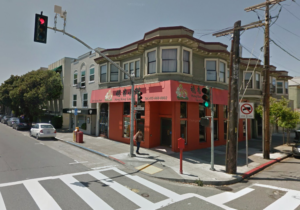
3304 Geary Boulevard, San Francisco 1980’ish — When we opened Network Answering Service in my studio apartment in 1976, it was because I’d realized that the phone company’s new “Call Forwarding” service would enable me to build an answering service without the need to buy a switchboard, which also needs a LOT of costly wiring. The downside of my method was that when our phone rang, the incoming call could be for ANY of our clients. But who?

So we’d answer, “Network Answering Service, who are you calling please?”

Oddly enough, this worked rather well, and so we grew.

But when we outgrew my studio apartment at 3rd and Anza, north of Golden Gate park, we had to move to a larger office, and I finally found one on Geary, and began to think about how we could compete better than those “regular” answering services which got paid more money. And along about the same time I was still learning about computers, and I had a bright idea.

I’d build a computer device that would do the client-identification, but from the incoming call-forwarded call. This would still enable us to use a small number of incoming lines and the Call-Forwarding feature, but still no switchboard, and a reasonable number of incoming lines … and with a computer I could pass some useful info to the answering operator.

Now this is a bit technical, but I’ll simplify …

First I learned a lot about how the phone company works, and that led me to study the FCC Document usually called “Part 68” to learn what they call E&M signaling protocol, and from this I fabricated a wire-wrapped board containing a Z-80 microprocessor and some relays. In this way my device would listen when a call came in — a 110volt pulse with a certain timing — and when we responded by closing the circuit, their E&M protocol handed US the call using the same make-break circuit timing as the old telephone dial.
In that way they would send us the last three digits of the telephone number. (All our received calls were within ONE bank of numbers and only the last three digits were specified.)
In this way we knew WHOSE number was being called, so that when my board threw some relays to light up the button on our operator’s phone, we knew to also display 3 lines of info about that client on a monitor in front of the operator. The operator (in our answering service) then read and answered “Johnson Insurance, May I Help You?” to take messages for our clients.
Took me a year to build this device, which I called the “Line-Seizer.” There were actually 8 of these wire wrapped cards, each monitoring one telco incoming trunk, and then a master computer polled each of these eight in quick rotation. And when one of these wire-wrapped cards had got the info and lit up the operator’s phone button, for example, button #5, the master computer got the message, retrieved the client’s info (from the 3-digit number that had been passed from the wire-wrapped card, and displayed it in location #5 on the operator’s monitor.
The program on the wire-wrap card was in Z-80 assembler language, and the monitoring computer (which needed much less speed) used a simple machine-control basic language.
This project, built from the ground up, from studying the FCC protocol, and computer manuals. It was one of the most satisfying things I’ve ever done, took me a year, and if I’d been a smarter business-owner I’d have bought some existing devices that could do a similar job, but I wanted to do it myself. Though I wish I’d been a smarter business-owner, to this day I look back on the project and feel proud.
One thing that mystified me for several years, though was the meaning of “E&M.” What did that mean?
Because the definition of “E&M signaling protocol” was spelled out nowhere in the FCC documentation. It did mention that the two parts of the protocol (“E” and “M”) were for the “incoming” call protocol and the “outgoing” call protocol.
Years later, I learned what it means.
It stands for “ear” and “mouth.” Struth!

Categories // All, bidness, computer, Looking Back, network answering service

Comments

  1. Jay R. Treviño says

    March 19, 2022 at 1:41 pm

    Amazing! It’s taken 40 years to understand what you did and how you did it. Kudos!

    Reply
    • bloggard says

      March 19, 2022 at 1:50 pm

      Wull, thanks. It was one of the most satisfying things I’ve ever done, and I gotta say that it probably wasn’t a smart decision, engineering and building this thing myself. It cost more than an existing solution that was available at the time, and it took a year of my life.

      So, both a dumb move business-wise, and one of the most satisfying projects ever!
      🙂

      Reply

Leave a Reply Cancel reply

Your email address will not be published. Required fields are marked *

Your Fortune Cookie

  • The time has come to talk of many things. Of shoes, and ships, and sealing wax. Of cabbages, and kings. -- The Walrus

Our Host


Perhaps you are wondering why I have gathered all of you here.

Recent Posts

  • Mister Blue
  • How to Drop the Weight, Look Better, and Feel Better … Made Easier
  • Most-efficient Exercise for Strength, Longevity, Blood-Pressure, and Balance
  • Creatine – for Fixin’ Up Your Brain!

Recent Comments

  • bloggard on The Altar Boys
  • Tonja Scheer on The Altar Boys
  • Raymond J.Reiss on Calling Lonesome Cowboy Tim

Search By Keyword

Currently 602 micro-stories searchable online. Enter search words and hit return:

Search by Category

View My LinkedIn Profile

View Arthur Cronos's profile on LinkedIn

Credits and Copyright

All contents copyright (c) 2001-2026 Arthur Cronos and Voltos Industries, Mount Shasta, California. Reproduction prohibited except as noted. All rights reserved.

Webdesign by VOLTOS

** TEXT NAVIGATION **
Home * Archives * About the Bloggard * Bloggard's Concise Autoblography * Contact Us * Terms of Use * Privacy Policy * Site Map * Voltos Industries


reviews

[wprevpro_usetemplate tid=”1″]

All Contents Copyright © 2001-2019 · Webdesign by VOLTOS